How to Stop Missing Patient Calls at Your Dental Practice (And What It's Costing You)
Every missed call is a patient lost. Here's what it's costing your practice and how to fix it for good.

India Healy O'Connor
CEO & Co Founder
How to Stop Missing Patient Calls at Your Dental Practice (And What It's Costing You)
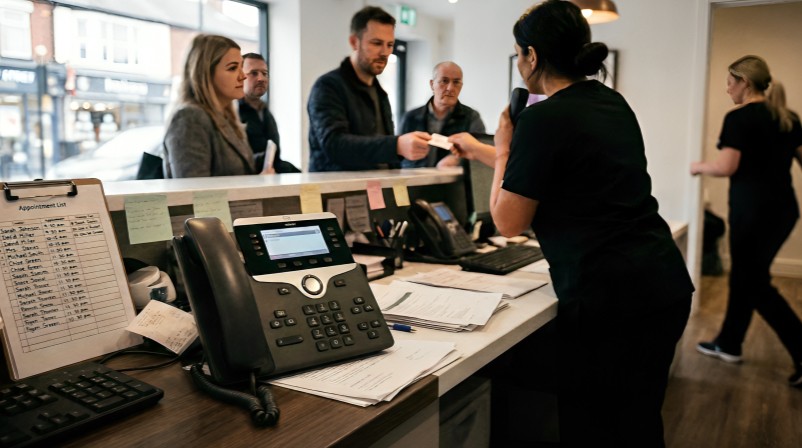
It's 11:47am. The surgery is full, the front desk is busy, and the phone rings. Then rings again. Nobody can pick it up.
That patient won't leave a voicemail. They'll call the next practice on Google and book there instead. You'll never even know.
Multiply that across every lunch break, every packed Monday morning, every evening call that goes unanswered, every afternoon your front desk is stretched. Missed patient calls are one of the biggest untracked revenue leaks in dental practices and most owners have no idea what the number actually is.
The average UK dental practice misses roughly 20-30% of inbound calls during peak periods, after hours, and when staff are engaged with in-clinic patients. This post breaks down exactly what missed calls are costing your practice, why the fixes you’ve already tried haven’t solved it, and what practices across the UK and Ireland are doing instead.
What Missing Patient Calls Are Actually Costing Your Practice
Most practice owners know missed calls are a problem. Few have sat down to put a number on it because it’s uncomfortable.
A new patient, over the lifetime of their relationship with your practice, is worth thousands of pounds: check-ups, hygiene appointments, fillings, composite bonding, a course of whitening. Conservative estimates put new patient lifetime value at £2,000-£5,000+ depending on whether you're predominantly private, NHS, or mixed.
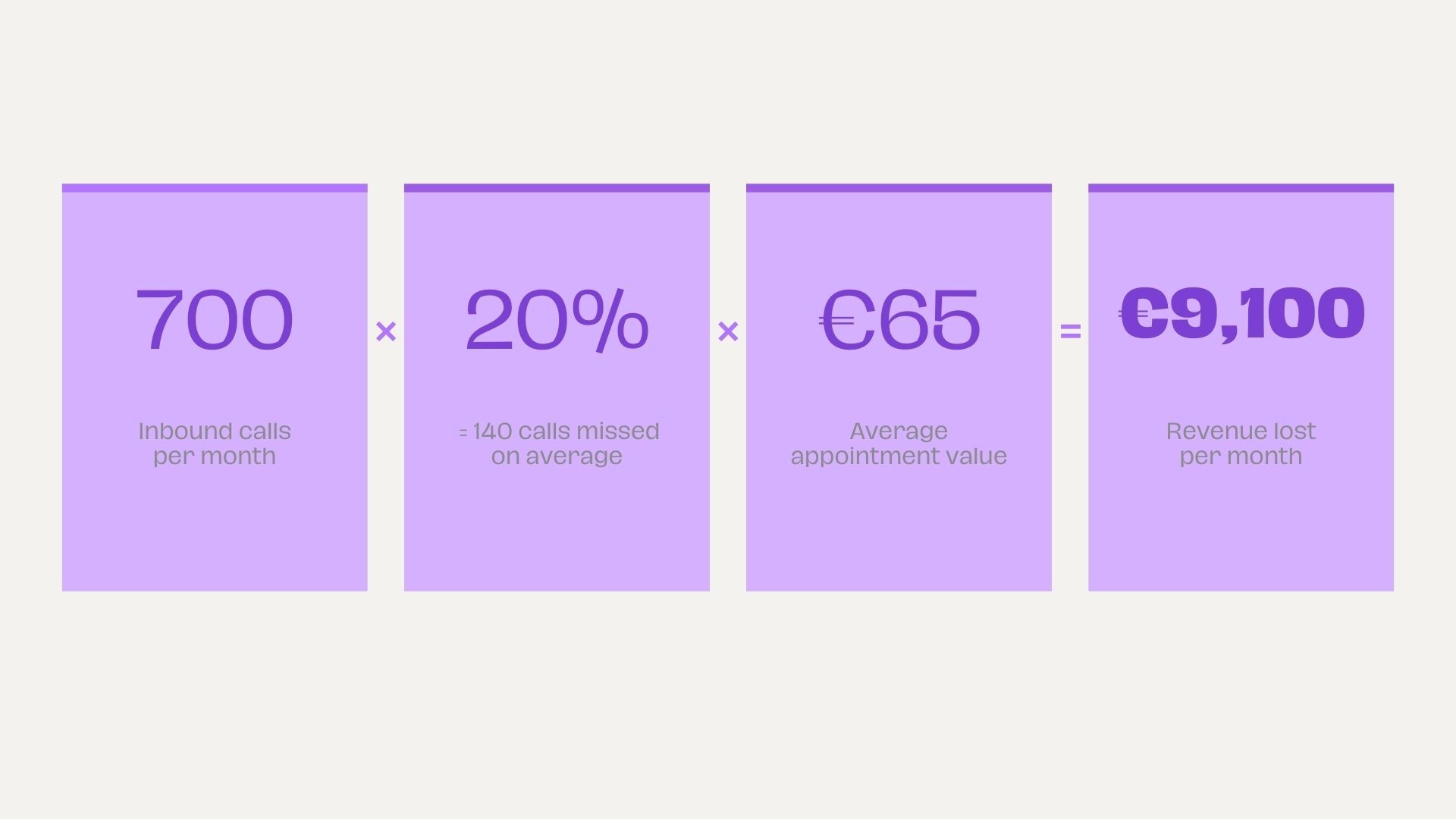
Take a practice handling 700 inbound calls a month with a 20% missed call rate and an average appointment value of €65. That's approximately:
€9,100+ in lost monthly revenue from missed calls alone.
That excludes follow-on treatments, hygiene visits, and the long-term lifetime value of a patient who never becomes a patient in the first place.
And that's before you factor in:
Empty chairs from no-shows. Manual confirmation calls get ignored. Patients don't answer numbers they don't recognise. The appointment gets forgotten, the slot stays empty, and you're paying a clinician to sit in a surgery generating nothing.
Marketing spend with nothing to show for it. If you're running Google Ads or investing in SEO to drive new patient calls, every unanswered call is money burnt. You paid to get them to ring. They rang. Nobody picked up.
Overflow during the times it matters most. On Monday mornings, the hour before lunch, calls stack up faster than a reception team can handle. The patients that don't get through are lost.
The after-hours problem
Most practices are aware that calls get missed during the day, but are less aware of how much business is lost after-hours.
Think about when patients actually decide to book. Not mid-morning on a Tuesday when they're at work. It's the evening. 26% of bookings across practices using Linda AI occur at lunchtime or outside standard working hours. These are appointments that simply don't exist without phone coverage. There's no other way for that patient to get in.
Why the Usual Fixes Don't Solve Missed Calls
Practices rarely ignore this problem. Most have tried something. Here's why the standard approaches tend to fall short.
Hiring more reception staff
The obvious answer. Hire another person to cover the phones better.
Maybe it helped for a bit. But you still have no cover after 7pm or on the weekends. You still have sickness, holidays, and staff turnover. Replacing a front desk team member costs several thousand pounds when you factor in recruitment, lost productivity, and the 60–90 days it takes a new hire to reach full productivity. And even a well-staffed desk can't be in two places at once. The call that comes in while your receptionist is checking in a patient, presenting a treatment plan, or handling a billing query still goes unanswered. Headcount helps. But it doesn't close the gap. The same bottleneck exists, just with extra costs.
Call-answering services
Generic answering services can pick up the phone. But they act as message-takers, not appointment-makers. Without direct access to your practice management software, they can't see your calendar, book an appointment, or do much at all beyond taking a name and number and promising a call back.
Generic AI chatbots
Maybe you tried an AI chatbot. Patients either can’t stand its robotic voice, or it can't handle anything beyond "What are your opening hours?” Generic AI’s lack of dental-specific intelligence, PMS integration, and booking capability limits its effectiveness as a long-term solution. Patients in pain, with urgent concerns, or anxious about treatment get frustrated at the AI’s inability to manage their enquiry, and they want to speak to a human. The call gets relayed back to your team, restarting the whole bottleneck again.
How Linda AI Solves the Missed Call Problem
The problem with the usual fixes isn't that they're bad ideas. It's that they're all missing an intelligent workflow layer that truly understands your practice. Something that can actually see your diary, understand your booking rules, and confirm an appointment – without a human in the loop.
And that's exactly the gap we built Linda AI to fill. An AI receptionist that handles the calls the team physically can't. Not as a replacement for the front desk, but as a layer that covers the excess capacity they are unable to handle.
Linda AI is built specifically for dental practices. She answers every inbound call, books directly into your practice management system, confirms appointments automatically by phone or WhatsApp, and works 24 hours a day, 7 days a week. Unlike generic AI assistants, Linda knows dental terminology, understands practice-specific workflows, and follows your calendar zones and booking rules.
Every booking appears in your system in real time, correctly coded, in the right appointment type, with the right clinician.
The Results Practices Have Seen
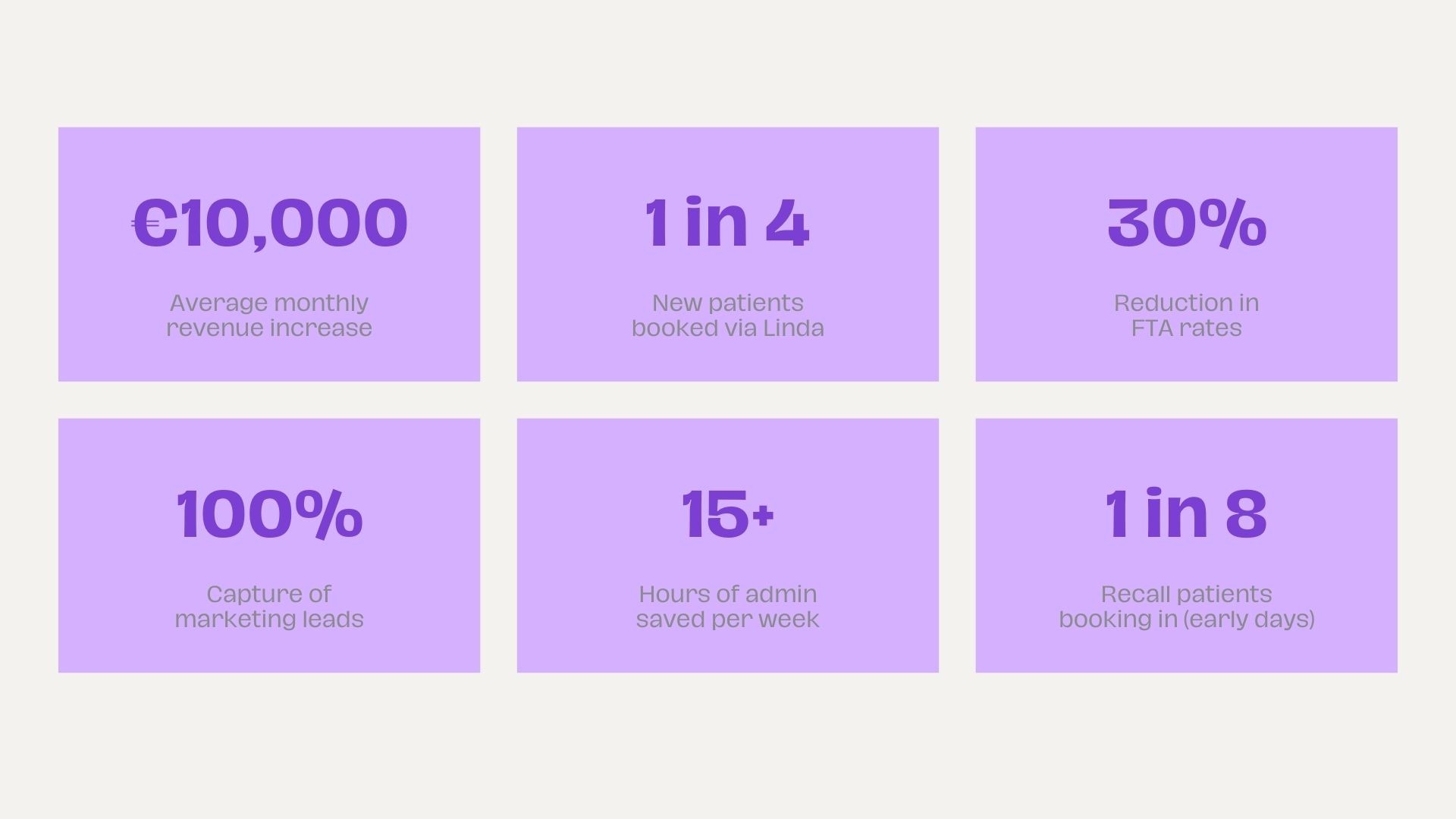
Client Spotlight
"Linda AI has become essential to our clinic. She manages calls when we're unavailable and handles outbound communications, and our patients love it. We've already recommended Linda to other practices."
- Docklands Dental
"Linda AI integrates seamlessly with our cloud-based practice management software and phone system. It has given us the flexibility to handle calls and bookings out of hours and at weekends while improving appointment confirmations, particularly for patients who haven’t responded to text messages."
- Cube Dental
Stop Losing Patients to Missed Calls
The question isn't whether missed calls are costing you. The question is whether you're going to keep accepting it as an unavoidable cost of running a practice or close the gap.
While additional reception staff can help during opening hours, they do not address out-of-hours demand or peak-time overload. Voicemail captures intent but still requires you reception staff to call back and convert them into bookings. Traditional answering services take messages but do not fill chairs.
An AI receptionist that integrates directly with your PMS ensures that every call is answered, every opportunity is captured, and your team remains focused on the patients in front of them.
If you would like to see the impact in your own practice, Linda AI offers a free 30-day pilot allowing you to experience real calls and real bookings with no long-term commitment. No contracts, no setup fees, no obligation. Live in 7 days.
Linda AI is trusted by Truly Dental, Cube Dental, Docklands Dental, Ark Dental, Sync Dental, and 60+ practices across the UK and Ireland. No VAT for UK practices.